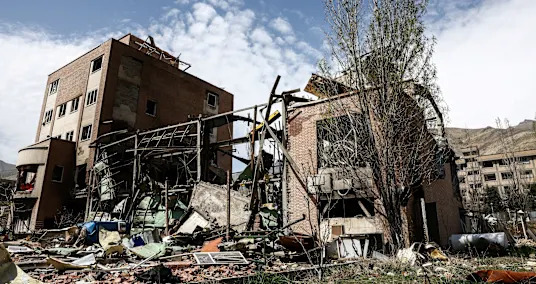
In Tehran, a city of nine million people, schools are closed, businesses are shuttered or struggling, and locals are living without a functioning air-raid warning system or public shelters. In many areas, the first sign of an incoming strike is the explosion itself.
There have been twice as many US and Israeli attacks on Iran compared to the number of Iranian retaliatory strikes since the war began — and the numbers killed in Iran have been orders of magnitude greater than in the neighboring Gulf states. A nationwide internet blackout, now entering its second month, has left civilians unable to access information about safety, shelter, and food and has meant some are unable to work. But while millions have fled Iran’s cities, many more are staying where they are. Some residents are hoping the US and Israeli bombs will cause the regime to collapse; others are left wondering if they are at risk if their neighbors are targeted.
For the many Iranians with ties to Dubai, there are other pressures, with Iranian nationals now barred from entering or transiting through the UAE. Residency permits, even for those with long-term Golden Visas, are reportedly being revoked without notice.

LATEST POSTS
- 1
 Manual for Mountain Objections on the planet
 - 2A Texas GOP congressman is retiring. Trump just endorsed his identical twin to replace him.
- 3Is 'Veronica Mars' about to be your new binge-watch? It's now streaming on Netflix.
- 4Meet ‘NASA Mike,’ who’s done 105,000 handstands around the world
- 5Woman gives birth on roadside after hospital allegedly sent her home: Family


- Moon milestones: A rundown of Artemis 2's many spaceflight firsts
- Which Carrier Do You Suggest? Vote
- Impact of NIH funding reductions felt in cancer and infectious disease trials
- African Forests Have Become a Source of Carbon Emissions
- New method spots signs of Earth's primordial life in ancient rocks
- There are thousands of aligned holes in Peru. Archaeologists now think they know who made them
- Ariana Grande and Jonathan Bailey will reunite for 'Sunday in the Park With George'
- Heart disease risk greater for women with a common condition they may not be aware they have
- 'Stranger Things' Season 5: When does Volume 2 come out? And Volume 3? Everything to know about the remaining episodes before the finale.