When you buy through links on our articles, Future and its syndication partners may earn a commission.

The waning gibbous moon shines close to the "kingly" star Regulus on Jan. 5-6, and some well-placed stargazers will even see the lunar disk glide in front of the bright star, hiding its ancient light from view completely.
Celestron NexStar 8SE

We reckon the Celestron NexStar 8SE is the best motorized telescope out there as it's great for astrophotography, deep-space observing and it offers stunning detailed imagery. It is a little pricey but for what you get, it's good value. For a more detailed look, you can check out our Celestron NexStar 8SE review.
Look to the eastern horizon around 8:30 p.m. local time on the night of Jan. 5 to spot the 87%-lit waning gibbous moon glowing less than 10 degrees — roughly the width of your outstretched fist — from the bright star Regulus in the constellation Leo.
Over the course of the night, the moon will appear to close in on the rapidly spinning star as the pair journey overhead through the winter sky. By sunset on Jan. 6, the lunar disk will have leapt to the lower left of Regulus, continuing on a path that will see it travel beyond Leo and through the constellation Virgo in the days ahead.
If you're looking skyward from eastern Europe, Asia and the Pacific you may even see the moon pass directly in front of Regulus, completely blocking its light in an event known to astronomers as an occultation.
Stargazers in parts of Russia, China and Kazakhstan will get their first glimpse of the moon passing in front of the ancient star at 10:19 a.m. EST (1519 GMT) on Jan. 6, followed by viewers in Japan and South Korea, according to In-The-Sky. The Midway Islands and Wake Islands will be the last territories to witness the occultation before it ends at 1:27 p.m. EST (1837 GMT).
Events like the Jan. 6 occultation occur because Regulus rests extremely close to the ecliptic, the name given to the band of sky that the sun and planets appear to travel across throughout the year.
Want to capture the majesty of the night sky for yourself? Then be sure to check out our roundups of the best lenses and cameras for astrophotography. If you want to make detailed observations of the moon and worlds of the solar system then be sure to check out our picks of the best telescopes available in 2026.
Editor's Note: If you capture an image of the moon with Regulus and want to share it with Space.com's readers, then please send your photo(s), comments, and your name and location to [email protected].
LATEST POSTS
- 1
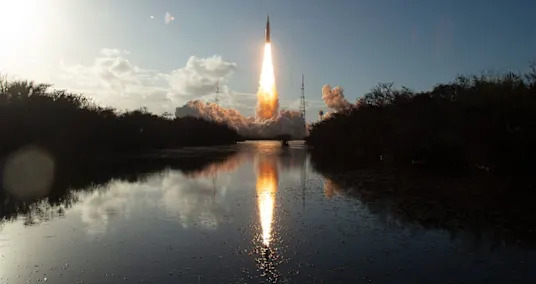
 Relive NASA's historic Artemis 2 launch to the moon in these stunning photos
 - 2The Most Paramount Crossroads in Olympic History
- 3Instructions to Arrange Your Compensation During Medical caretaker Prospective employee meetings
- 44 Jeep Models: Dominating Execution and Flexibility for Each Experience
- 5Italian police hold suspected boss of Naples Mafia's Mazzarella Clan




- Trump says Venezuela will start 'turning over' oil to the U.S. Is that the reason he toppled Maduro — or is it something else?
- Hoist Your Style: Famous Hairdos for Ladies
- One ant for $220: the new frontier of wildlife trafficking
- Amid growing bipartisan scrutiny of Pete Hegseth, Trump says he 'wouldn't have wanted … a second strike' on alleged Venezuelan drug boat survivors
- Czech Republic caps fuel prices amid Iran war energy crisis
- The most effective method to Stay away from Normal Traps While Recruiting a Material Organization
- The most effective method to Use an Internet Showcasing Degree for Advanced Predominance
- 5 Home EV Chargers for Proficient and Solid Charging
- NASA releases stunning new images captured by the Artemis II moon mission, including 'Earthset' and a solar eclipse from space