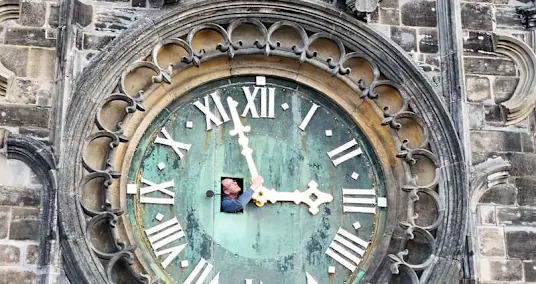
Clocks across the majority of European countries are set to go forward by one hour early on Sunday as the continent moves to daylight saving time, also known as summer time.
Clocks in most European nations including Germany advance by one hour at 2 am (0100 GMT) to 3 am, heralding longer evenings and brighter days.
This means that for the coming months parts of Europe will be on Central European Summer Time (CEST), before moving back to Central European Time (CET) in the autumn, when clocks go back again by an hour on October 25.
The aim of the change is to make better use of daylight in the shorter days of the winter in the northern hemisphere.
The signal for the automatic changeover of the clocks in Germany comes from the Federal Institute of Physics and Metrology (PTB) in the northern city of Braunschweig, also known as Brunswick in English.
The institute's experts ensure that radio-controlled clocks, station clocks and many industrial clocks are supplied with the signal via a long-wave transmitter called DCF77 in Mainflingen near Frankfurt.
LATEST POSTS
- 1
 Video of clashes over purported conscription orders misrepresented as anti-war protest in Israel
 - 2Exploring Programming Greatness: A Survey of \Easy to use Connection points\
- 32023's Best 10 Cell phone Advancements You Can't Miss
- 4Decrease in Home Buy Credits and Home loan Renegotiating Rates: An Outline of Latest things
- 5Foreign journalist kidnapped in Iraq: Interior Ministry




- Finding the Universe of Craftsmanship: Individual Encounters in Imagination
- Jubilant FoodWorks to scrap Dunkin’ franchise arrangement in India
- Pick Your Favored kind of sandwich
- Spain’s Picos de Europa: What to see and do in ‘the world’s most beautiful place’
- Viable Monetary Tips to Advance Your Monetary Circumstance
- This Canadian crater looks like marbled meat | Space photo of the day for Jan. 6, 2026
- Bond Girl Ursula Andress’ $23 Million Fortune Once ‘Fraudulently Misappropriated’ Was Allegedly Found
- As cases of a rare, deadly infection rise, doctors worry fewer teens will get vaccinated
- The pace of hiring just fell to the lowest since 2011, outside of the pandemic