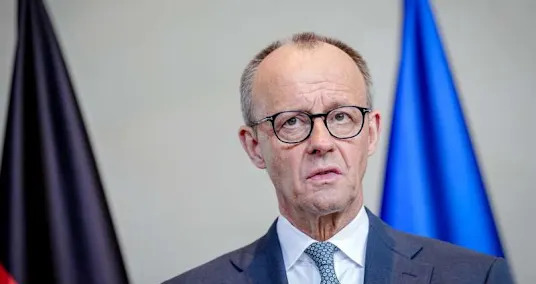
German Chancellor Friedrich Merz has said that 80% of the more than 900,000 Syrian nationals in Germany should return to their home country in the next three years.
At a press conference with Syria's interim President Ahmed al-Sharaa in Berlin on Monday, Merz said the leaders agreed that over the "longer term of the next three years," around "80% of the Syrians currently in Germany should return to their homeland."
"That was also the wish of President Sharaa," Merz said, adding that "those Syrians who wish to remain in Germany and are well integrated will be able to stay in Germany."
Germany was one of the main destinations for Syrian refugees fleeing the devastating civil war, with around 1 million arriving in the country during dictator Bashar al-Assad's time in power.
Calls for Syrian nationals to leave Germany have risen in conservative and far-right circles following al-Assad's ousting in late 2024 by an Islamist coalition led by al-Sharaa.
LATEST POSTS
- 1
 RFK Jr. releases new dietary guidelines with emphasis on protein, full-fat dairy
 - 2'Crammed into a cell with vermin at New Year'
- 3Step by step instructions to Explore Assessment Ramifications of Disc Rates
- 4Doomed SpaceX Starlink satellite photographed from orbit
- 5Artemis II's moonbound toilet is working again to astronauts' relief after overnight fix


- Instructions to Guarantee Kids Foster Solid Dental Propensities
- Internet goes (cocoa) nuts: The funniest reactions to 12 tonne theft of KitKat bars
- Invigorating Spots To Go Kayaking All over The Planet
- Whale stranded off Germany for days found stuck again
- Deadly Switzerland ski resort fire was likely started by sparklers attached to champagne bottles, officials say
- Astronauts welcome arrival of new crewmates | On the International Space Station this week Nov. 24-28, 2025
- Dominating Capable Mastercard Utilization: Key Contemplations
- Tickets for 'Stranger Things' Season 5 finale, to be shown in movie theaters on New Year's Eve, go on sale today. Here's how you can save your seat.
- Satellite constellations could obscure most space telescope observations by late 2030s: 'That part of the image will be forever lost'